About Chessreps
Short answer
Chessreps is a chess opening trainer where you learn openings by playing the moves yourself, from courses written by titled players and checked against real Lichess games. The first line of every course is free to play without an account, and a 7-day free trial unlocks the rest. After that, one membership is $34.99 a year on the web.
By Ethan Netz, founder of Chessreps · Updated
How does Chessreps teach an opening?
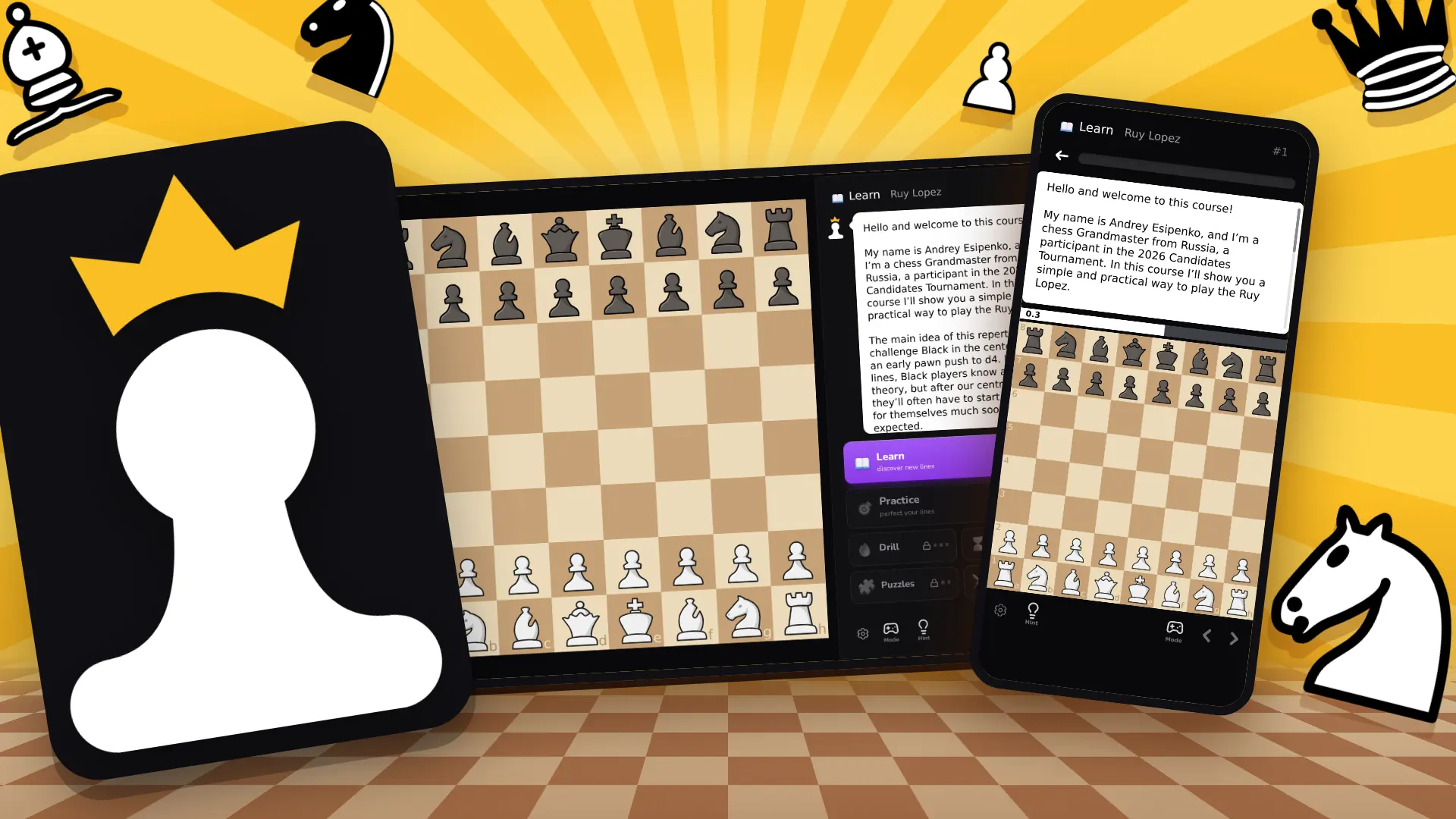
On Chessreps you learn an opening by playing it. You make your move on the board, the course answers with a reply real opponents play, and the author's note explains the position before you move again.
I started Chessreps because I kept forgetting the openings I studied. A line I'd read would come up in a game weeks later, and by then it was gone. Playing the moves yourself, and playing them again right before you'd forget them, is what makes a line stay with you. One player put it this way: "Drilling on Chessreps is as fun as actually playing."
How are Chessreps courses built?
Every Chessreps course is checked against real Lichess games, so it answers the moves your opponents actually play.
At each position where it's your opponent's turn, we look up the replies Lichess players chose there. Any reply played in 1% or more of those games is a gap until the course answers it, and a gap counts for more the more often you'd reach its position. Answered positions add up to the course's coverage score. Authors take the biggest gap first and keep adding lines until the replies you're likely to meet are covered. The full method, with a worked example, is on Chessreps vs Chessable.
The same Lichess data shows which moves players choose at each rating. You can browse it on our page of what players play at every rating.
Who writes the Chessreps courses?
Grandmasters and titled players have written 60+ Chessreps courses, including GMs Wei Yi, Andrey Esipenko, Boris Gelfand, and Mitrabha Guha.
 GM Wei Yi
 GM Andrey Esipenko
 GM Boris Gelfand
 GM Mitrabha Guha
Each author chooses the lines and writes the notes in their own voice. The notes explain the idea behind each move and what to do when your opponent slips up. As one player wrote, "I love that you explain WHY a pawn is pushed." Alongside the titled courses there are Chessreps' own courses and community courses, which players build with the course creator and share with other players.
How do you practice openings on Chessreps?
Chessreps has six ways to practice a course, from meeting a line for the first time to playing it out as a rated game.
Learn
Play through each line move by move, with the author’s notes.
Practice
Replay the lines you’ve learned without hints. FSRS spaced repetition brings each line back right before you’d forget it.
Drill
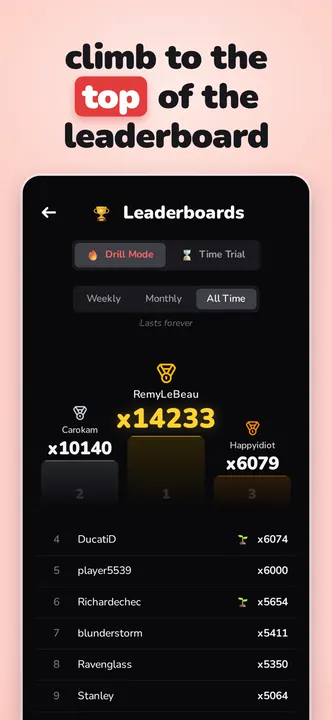
Your learned lines in random order, with a streak that ends at your first mistake and leaderboards for the longest.
Time Trials
Race a 60-second clock that speeds up as you score. Every line you play without a mistake or a hint wins back a few seconds.
Puzzles
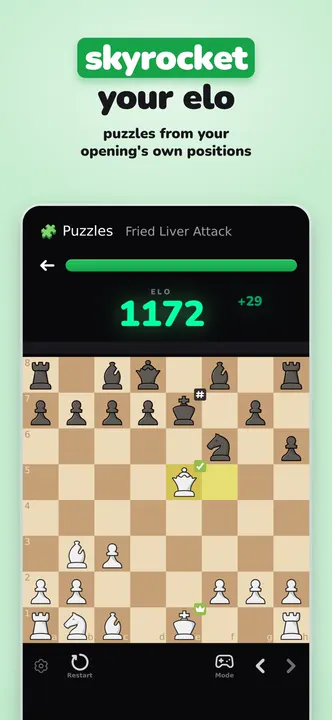
Positions from Lichess games where the opponent left your line and blundered, so you find the punishment.
Arena
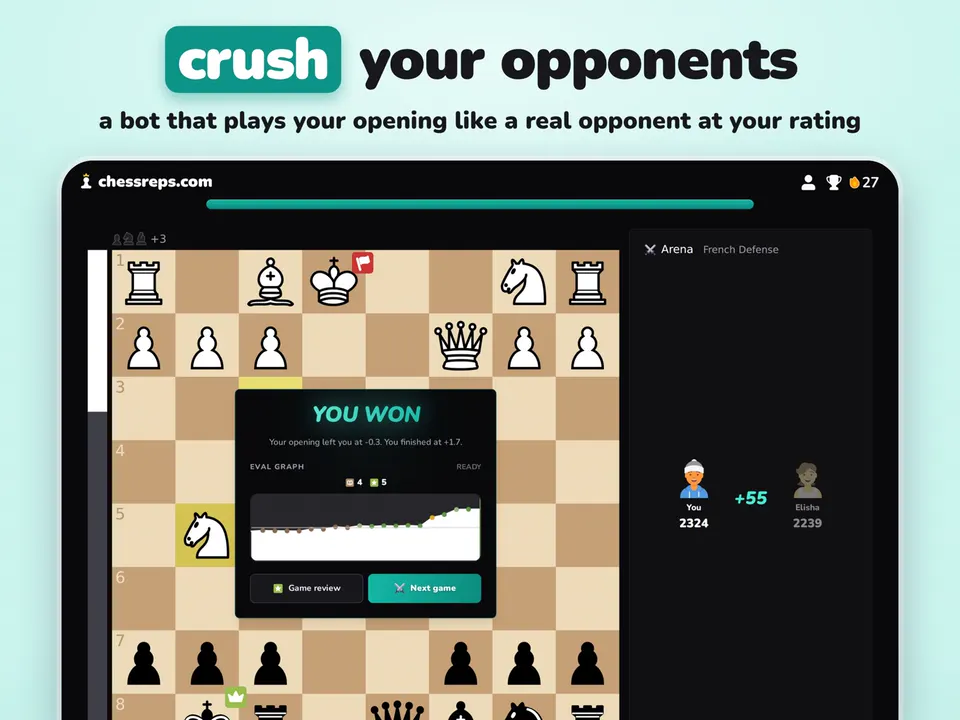
Play your opening out as a real game against moves drawn from Lichess games near your Arena rating. The engine’s verdict at the end moves that rating up or down, and each course keeps its own, starting at 950.
Where can you use Chessreps?
Chessreps works on the web, iPhone, iPad and Android, and your progress syncs across all of them. The app is rated 4.9 on both the App Store and Google Play.
How much does Chessreps cost?
You can start Chessreps for free, because the first line of every course is free to play without an account.
A 7-day free trial unlocks every course, and after the trial the membership is $34.99 a year on the web. That one membership includes every titled course, the community courses, all six modes and the course creator. The plans page has the details.
Who makes Chessreps?
Chessreps is made by me, Ethan Netz, its founder. It's my full-time work, and the company behind it is CHESSREPS, LLC.
If you're choosing between opening trainers, I've compared Chessreps with Chessable, Chessly, Chessbook, Lichess and others, with every fact sourced and dated, on the compare pages. Players' own words about Chessreps are on what players say about Chessreps. You can email me at ethan@chessreps.com.
Frequently asked questions
What is Chessreps?
Chessreps is a chess opening trainer where you learn openings by playing the moves yourself, from courses written by titled players and checked against real Lichess games. It works on the web, iPhone, iPad and Android.
Who makes Chessreps?
Chessreps is made by Ethan Netz, its founder, and published by CHESSREPS, LLC. Grandmasters and titled players have written 60+ of its courses.
Is Chessreps free?
Chessreps is free to start, because the first line of every course is free to play without an account. A 7-day free trial unlocks every course, and after the trial the membership is $34.99 a year on the web.
How are Chessreps courses made?
Grandmasters and other titled players write the titled courses, and Chessreps checks every course against real Lichess games. Any reply that players choose in 1% or more of games from a position counts as a gap until the course answers it, and authors keep adding lines until the common replies are covered.
What devices does Chessreps work on?
Chessreps works in any web browser and as an app for iPhone, iPad and Android, and your progress syncs across all of them.