Which chess opening trainer is best for you in 2026?
We make Chessreps. This page says where each tool is the better pick.
Short answer
For most players learning openings, Chessreps is the pick. It plays like a game, its courses are by titled players and checked against real Lichess games, Arena tests each opening in short rated games, and every course costs $34.99 a year on the web. If you want a famous grandmaster's long book instead, Chessable is the better pick. Chessbook is for building your own repertoire from game data, Chessly is for learning from GothamChess videos, and Lichess with Listudy or Chessdriller costs nothing.
You can play the first line of any Chessreps course without signing up. It is rated 4.9 (2,400+ ratings) on the App Store and 4.9 (2,700+ reviews) on Google Play (US).
By Ethan Netz, founder of Chessreps · Updated · Competitor facts checked
How do 11 opening trainers compare?
The eleven trainers fall into three groups. Chessable, Chessly and Chessreps are course libraries. Chessbook, Chesstempo, Listudy, Chessdriller and Chess Position Trainer drill lines you write yourself. Lichess, Chess.com and Chessiverse are broader chess sites with opening features. The table has the detail for each, read from their own pages on November 2, 2026, in US dollars.
| Tool | Where the lines come from | How it drills you | Paid price | Best for | Main trade-off |
|---|---|---|---|---|---|
| Chessreps | 59 courses by 41 titled players and 800+ community courses. Every course gets a coverage score against real Lichess games. | You play every move yourself and the course answers. FSRS spaced repetition in Practice, plus Drill, Puzzles, Time Trials and a rated Arena. Wrong moves are explained. | $34.99/year on the web after a 7-day free trial. App store prices are higher because Apple and Google take a cut. | Learning openings by playing them, from ready-made courses built around the moves real opponents play. | Shorter courses than a long GM book, and no long video lectures. |
 Chessable | Chosen by each course's author. 1,000+ courses by 400+ authors, many of them GMs. | MoveTrainer spaced repetition on a fixed 8-step ladder, 4 hours to 6 months. A miss sends the move back to the start. | PRO is $11.99/month or $74.99/year. PRO does not include courses; most are bought one by one. | Long GM-written courses with prose and optional video, from a huge catalogue. | Each course is its author's choice of lines, and each one costs extra. |
 Chessly | Chosen by IM Levy Rozman (GothamChess) for all 67 courses. | Interactive lessons, drills and videos, with XP and leaderboards. How reviews are scheduled is not published. | One membership covers every course: $89.99/year on the web. iOS in-app: $9.99/month or $89.99/year. | Beginners and GothamChess fans who want video lessons and one subscription for everything. | Every line is one author's choice, and the native apps only launched in October 2026. |
 Chessbook | You choose them, using Lichess data at your rating, Stockfish and Autofill. 23 free pre-made repertoires. | FSRS spaced repetition for each move, plus training games against a human-like bot. | Pro is $7/month billed annually. iOS in-app: $7.99/month or $79.99/year. | Building your own repertoire from scratch, guided by data at your rating. | A tool more than a teacher: few explanations, and many repertoire decisions are yours. |
 Lichess | You find or write them in user Studies. The opening explorer covers 6 billion games. | No opening spaced repetition. An interactive lesson chapter walks you through a line, with hints and feedback on wrong moves. | Free. No ads, no subscriptions. | Everything free: games, analysis, a huge explorer and shared studies. | No opening drill. You write or find lines and memorise them yourself. |
| Listudy | Your PGN, a Lichess study, or public user studies. | Spaced repetition. A mistake brings the position back sooner. | Free and open source. | Free spaced repetition on a Lichess study or PGN you already have. | Memorisation only, on the web only. The changelog stops in 2022. |
| Chessdriller | Your Lichess studies, after you log in with Lichess. | Spaced repetition from 10 minutes up to days. A wrong move resets the interval. | Free and open source. | Lichess users who already keep their repertoire in studies. | A beta on the web only, and its GitHub repo is archived. |
 Chess.com | Lessons and MoveTrainer courses by members or masters, and a master explorer of nearly 3 million games. | MoveTrainer spaced repetition on 8 levels, 4 hours to 6 months, and Practice against a bot. | Gold, Platinum and Diamond tiers add the full explorer, unlimited lessons and unlimited Game Review. | Players already on Chess.com who want lessons, games and review in one account. | Opening study is spread across Lessons, Explorer, Practice and courses, and the free explorer stops at move 4. |
 Chesstempo | You supply them, by PGN import or by entering moves. | Spaced repetition, limited to a branch, a repertoire or a colour if you like. | Silver, Gold and Diamond tiers. US App Store monthly: $2.99, $3.99 and $8.99. | Players who know their repertoire and want a free, deep PGN tree with spaced repetition. | You build and maintain every line yourself, and the interface is dense. |
 Chessiverse | Bots built on Maia, trained on human games, each with its own repertoire. | You play games against bots. No spaced repetition is described for openings. | Premium is $12.99/month or $89.99/year, each with a 7-day free trial, or $299 lifetime. Courses are sold separately. | Playing your opening out against human-like bots at your level. | Practice, not memorisation, and the move-1 opening mode is paid. |
 Chess Position Trainer | You build them or import PGN files. | Flash cards with a scheduler, plus random, systematic and blindfold modes. | $39.90 one-time licence for CPT 5 Pro. | Serious players on a Windows PC who want a one-time purchase and an offline database. | Windows only, and the site footer reads "Copyright © 2004-2019". |
A check marks the best value in each column.
What should a chess opening trainer do?
An opening trainer should fit the way you already study, so settle four questions before comparing features. No tool here is the answer to all four.
Who should choose the lines? If you want a strong player to choose them, look at Chessable, Chessly or Chessreps. If you want to choose them yourself, Chessbook, Chesstempo and Lichess studies are built for that. How much explanation do you want? Chessable books go deepest, often with video, Chessly teaches through Levy Rozman's videos, and Chessreps puts shorter notes on the board as you play. Do you need help remembering? Most paid tools and several free ones schedule reviews, and the section on spaced repetition below compares how. And what will you spend? Lichess, Listudy and Chessdriller cost nothing at all.
Which trainer is best if you want ready-made courses?
For ready-made courses, Chessable has the biggest library of grandmaster books, Chessly has one teacher on video, and Chessreps has shorter courses you learn by playing, each checked against real games.
Chessable: the biggest library of grandmaster books
Chessable sells 1,000+ courses by 400+ authors, and Carlsen, Polgar and Caruana sell theirs there. A course opens with the author's explanation in prose, often with a video edition, and MoveTrainer then quizzes you on the moves. You buy most courses one at a time. Caruana's Dark Archangel, a Ruy Lopez course, is $49.99, or $299.98 with video. PRO, at $74.99 a year, takes at least 30% off paid courses and adds short courses and offline mode.
Chessly: GothamChess for everything
All 67 Chessly courses are by IM Levy Rozman, built from video lessons and interactive drills, with XP, leaderboards and a bot called Levi. One membership opens the whole catalogue for $89.99 a year on the web. If his way of explaining chess is what made it click for you, every opening stays in that voice.
Chessreps: courses you learn by playing
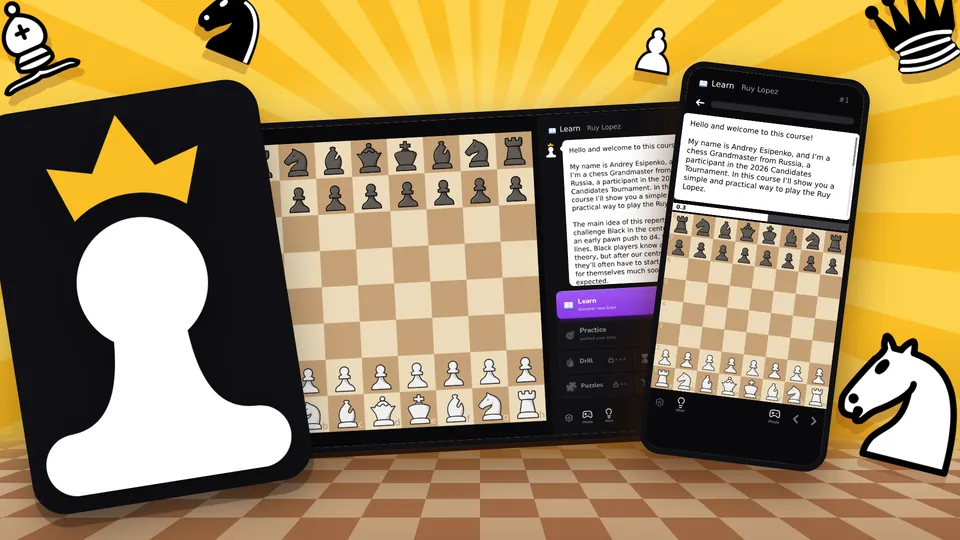
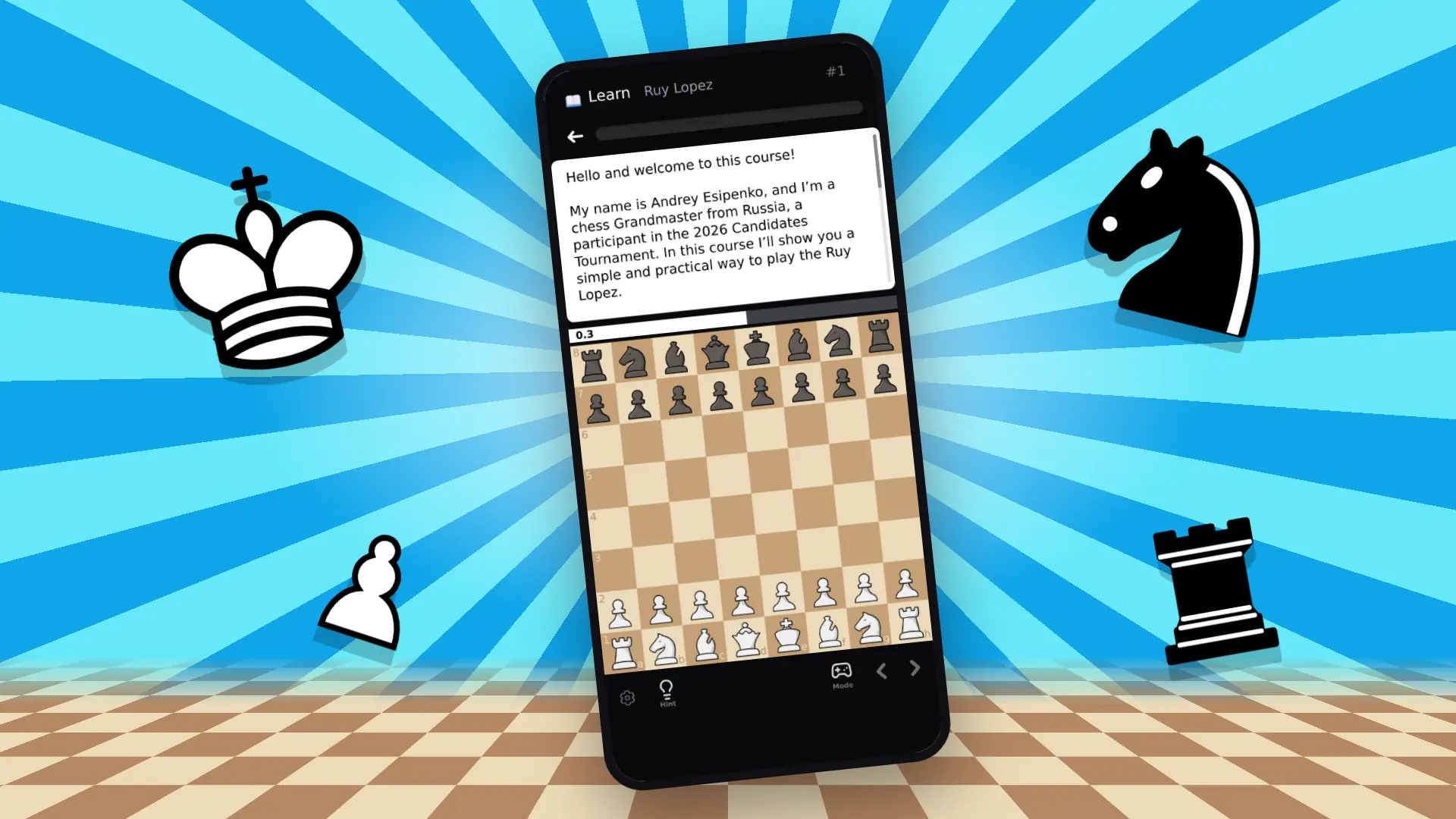
A Chessreps course plays like a game from the first move. Open GM Wei Yi's Italian Game and the board is already there, with no signup, his welcome note and one instruction, "Play pawn to e4." You play it, Black answers, and the next note explains the idea behind knight to f3 before asking you to find it. Play a move that hangs a piece and the app tells you which piece takes it. The authors are 41 titled players, GMs Wei Yi, Andrey Esipenko, Boris Gelfand, and Mitrabha Guha among them, with 59 courses between them and 800+ more from the community.
Each course is then measured against what people really play. For every position the course reaches, Chessreps looks up the replies Lichess players chose there in blitz, rapid and classical games. A reply chosen in at least 1 game in 100 that the course leaves unanswered counts as a gap, and gaps near the start of the game count for more than gaps deep in a sideline, because far more games pass through them. Adding up how much of that traffic the course answers gives its coverage score, a number of points rather than a percentage. Community course cards show the score, and the course creator shows it live, along with the gap list and a "Fully covered" label once no gaps are left.
A White course after 1.e4 with nothing against the Scandinavian would have that hole on move one, where 1…d5 turns up in 6% to 12% of games in every rating band from 600 to 2399 on our data.
When a titled author builds a course, the gap list decides the order of work. The gap that the most games run into gets an answer and a note first, then the next one down the list, and the author keeps going until hardly any common reply is left without an answer.
Chessbook applies a similar idea to repertoires you build yourself, through its "1 in n games" goal. Chessreps applies it to courses written for you. Its courses are shorter than a long grandmaster book and have no long video lectures. After working through the Scotch Game course, one player wrote, "He literally played the same line the app taught me."
Where can you play your opening against human-style opponents?
Chessiverse is the place for full games against human-like bots, and Chessreps Arena is the place for short rated games that test one opening. Chessbook, Chess.com and Chessable each have a bot option as well.
An Arena game starts from the moves all the lines of a course share and is decided once the opening is over. It opens up after you have learned 2 lines. From the shared moves onward you choose your own moves, and every reply comes from Lichess games played near your Arena rating, weighted by how often players picked each move. Once players at that level have no more games from the position, the engine makes one last move and Stockfish judges the result against where the course's moves had left you. Finish more than half a pawn better off and you gain rating, more than half a pawn worse off and you lose it, and anything closer is a draw.
In a Caro-Kann Arena game we played while checking this page, the course's moves left our side 0.2 pawns worse and the game ended 2.1 pawns worse, so it counted as a loss. Ratings start at 950, and each course has its own. One player wrote on our Discord, "I'm really loving Arena - I had been thinking of writing my own chess thing for just this feature."
Chessiverse's bots are built on Maia, a model trained on human games, and each keeps its own repertoire. Starting any opening from move one is part of Premium, $89.99 a year. Chessbook's training bot plays what people at the level you choose tend to play. Chess.com Practice lets you choose an opening and a colour and play any line against a bot, and Chessable's robot icon sends a course position to a Chess.com bot.
Which opening trainers use spaced repetition?
Eight of these trainers use spaced repetition for openings: Chessreps, Chessbook, Chessable, Chess.com's MoveTrainer courses, Chesstempo, Listudy, Chessdriller and Chess Position Trainer. Lichess has no opening drill, and Chessiverse and Chessly don't describe how they schedule reviews.
The schedulers differ. Chessreps and Chessbook use FSRS, which sets the gap before a review from how well you remembered last time. Chessreps schedules whole lines in Practice, while Chessbook schedules single moves. Chessable's MoveTrainer climbs a fixed ladder of 8 steps, from 4 hours to 6 months, and a wrong move goes back to the first step. Chess.com's MoveTrainer works the same way. Listudy, Chessdriller, Chesstempo and Chess Position Trainer schedule lines you bring.
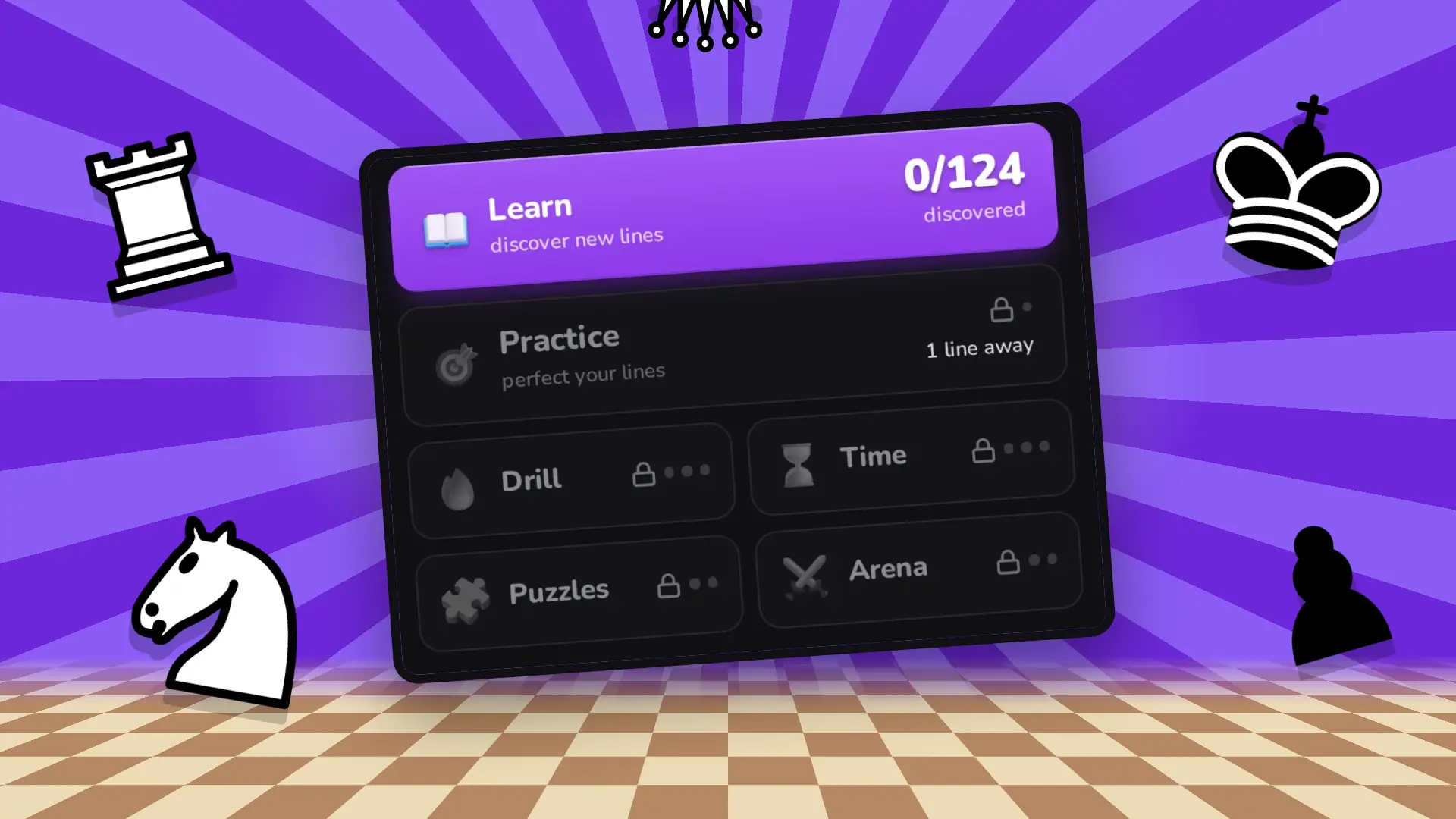
Chessreps adds other ways through the same lines. Drill shuffles the lines you've learned into a streak that one mistake ends, with leaderboards for the longest runs. Time Trials gives you 60 seconds and adds time for each clean line, while the clock speeds up as your score climbs. Puzzles come from Lichess games that followed your course until the opponent left it and blundered. One player wrote, "Drilling on Chessreps is as fun as actually playing."
Which trainer is best for building your own repertoire?
Chessbook is the strongest choice for building your own repertoire. Chesstempo, Chess Position Trainer and Lichess studies are the other options.
In Chessbook you set a goal of "1 in n games", and it asks you to prepare every position you are expected to reach that often, using game data for your rating range. Autofill can draft moves up to that goal, and if you connect Lichess or Chess.com it marks where your games left the repertoire. The free plan saves up to 200 moves, and Pro is $84 a year on the web. Chessbook leaves most choices to you and explains few of them.
Chesstempo drills a PGN repertoire with spaced repetition for free, and it rewards the time it takes to learn its dense interface. Chess Position Trainer is a Windows program with flash cards, sold as a one-time licence for $39.90. A Lichess study holds up to 64 chapters, and Listudy or Chessdriller will drill it. Chessreps has a course creator for PGN files and Lichess studies too, though its main use is the ready-made library.
Which chess opening app is best on iPhone and Android?
Chessbook and Chessreps have the highest US App Store ratings of the trainers with phone apps, at 4.9 and 4.9, and Chess.com's 4.8 rests on far more ratings than any other. Chessly's score comes from 23 ratings, so it says less. Ratings checked November 2, 2026:
| App | App Store | Google Play (US) |
|---|---|---|
| Chessreps | 4.9 (2,400+ ratings) | 4.9 (2,700+ reviews) |
| Chessable | 4.8 (6K ratings) | 4.5 (17K reviews) |
| Chessly | 4.6 (23 ratings) | 4.9 (85 reviews) |
| Chessbook | 4.9 (2.2K ratings) | 4.8 (5.55K reviews) |
| Lichess | 4.1 (799 ratings) | 3.9 (15.9K reviews) |
| Chess.com | 4.8 (867K ratings) | 4.7 (3.48M reviews) |
| Chesstempo | 4.0 (113 ratings) | 4.2 (2.6K reviews) |
A check marks the top value in each column.
No phone app: Listudy (Web), Chessdriller (Web), Chessiverse (Web), Chess Position Trainer (Windows).
On Chessreps you tap a course and the board is there, with no account to make first. Your lines carry over between iPhone, iPad, Android and the web, it has full offline support, and progress syncs when you reconnect. Chessable's help pages say its apps do less than its website, and offline study there is part of PRO.
Does your rating change which trainer you need?
Your rating matters most when you choose lines, and Chessbook is the trainer that builds them from games in your rating range. Chessreps courses are the same at every rating. Arena is the part of Chessreps that matches your opponents to your level.
On our count of 2.80 billion rated Lichess games, the Caro-Kann is 2.7% of Black's replies to 1.e4 at 600-799 and 12.1% at 2200-2399, and the French grows from 5.3% to 12.6%. A player who opens 1.e4 at around 700 rarely meets either, and at around 2300 one of the two comes up in about a quarter of games. The Lichess explorer lets you filter by rating band yourself, and the full tables are on what chess players actually play at every rating.
Which should you pick?
Match the trainer to the kind of player you are.
- You want ready-made courses you learn by playing, at one price. Chessreps.
- You want a famous grandmaster's repertoire, in depth. Chessable.
- You want to choose every move, guided by data at your rating. Chessbook.
- You learn best from video and like GothamChess. Chessly.
- You already play on Chess.com. Its lessons, Practice and MoveTrainer courses keep everything in one account.
- You want full games against bots that play like people. Chessiverse.
- You won't pay anything. Lichess with Listudy or Chessdriller, or Chesstempo. Our page on free chess opening trainers walks through it.
- You work on a Windows PC and prefer a one-time purchase. Chess Position Trainer.
How we compared
I've used Chessable, Chessly, Chessbook and Lichess myself. Every competitor fact on this page comes from that product's own website, help pages or store listing, read on November 2, 2026. Each source is listed below. Prices are in US dollars. Store ratings are from the US App Store and Google Play on the same day.
Prices and features change. If something here is wrong or out of date, email ethan@chessreps.com and I will fix it and update the date at the top.
Sources checked
- Chessreps
- Chessable
- www.chessable.com/pro/
- support.chessable.com/en/articles/9016006-are-chessable-accounts-really-free
- www.chessable.com/
- support.chessable.com/en/articles/9043598-how-does-the-spaced-repetition-scheduling-work
- support.chessable.com/en/articles/14136733-what-is-the-opening-repertoire
- apps.apple.com/us/app/chessable-study-chess-smarter/id1523279049
- play.google.com/store/apps/details?id=com.chessable.chessable&hl=en_US&gl=US
- support.chessable.com/en/articles/9047946-why-is-the-number-of-games-on-import-limited
- www.chessable.com/blog/an-update-on-recent-changes-and-responses-to-your-questions/
- www.chessable.com/mt1/caruanas-ruy-lopez-dark-archangel/course/188495/?mt2lang=en
- www.chessable.com/mt1/aman-hambletons-london-system/course/353577/?mt2lang=en
- www.chessable.com/mt1/alex-banzeas-london-system/course/118788/?mt2lang=en
- www.chessable.com/mt1/counterblow-a-complete-fighting-repertoire-for-beginners/course/199358/?mt2lang=en
- support.chessable.com/en/articles/9034333-what-are-the-rating-ranges-of-your-recommendation-levels
- support.chessable.com/en/articles/9038743-i-constantly-have-too-many-moves-to-review-can-i-adjust-this
- support.chessable.com/en/articles/9043818-is-there-a-chessable-app
- support.chessable.com/en/articles/9028413-can-you-study-the-courses-offline
- www.chessable.com/blog/train-against-bots-the-highly-requested-feature-is-here/
- www.chessable.com/blog/4-chess-prep-things-you-can-now-do-smoother-and-faster-with-chessables-new-opening-explorer/
- support.chessable.com/en/articles/9039388-how-does-the-30-day-money-back-guarantee-work
- support.chessable.com/en/articles/9047959-can-i-export-my-course-as-pgn
- Chessly
- Chessbook
- www.chessbook.com/pricing
- wiki.chessbook.com/getting-started
- wiki.chessbook.com/spaced-repetition
- wiki.chessbook.com/import-export
- apps.apple.com/us/app/chessbook-master-openings/id6466343415
- play.google.com/store/apps/details?id=com.chessbook.android&hl=en_US&gl=US
- wiki.chessbook.com/completion
- wiki.chessbook.com/autofill
- wiki.chessbook.com/connected-accounts
- wiki.chessbook.com/training-games
- www.chessbook.com/courses
- www.chessbook.com/fulfillment_policy.html
- Lichess
- lichess.org/patron
- lichess.org/features
- lichess.org/@/lichess/blog/interactive-lessons/WtDErSQA
- apps.apple.com/us/app/lichess/id1662361230
- play.google.com/store/apps/details?id=org.lichess.mobileV2&hl=en_US&gl=US
- github.com/lichess-org/lila/blob/master/modules/study/src/main/Study.scala
- lichess.org/practice
- github.com/lichess-org/api/blob/master/doc/specs/tags/openingexplorer/lichess.yaml
- Chess.com
- support.chess.com/en/articles/8562418-what-does-each-level-of-premium-membership-get-me
- support.chess.com/en/articles/8615183-what-is-the-game-explorer
- support.chess.com/en/articles/10319322-how-does-the-spaced-repetition-scheduling-work
- apps.apple.com/us/app/chess-com-play-and-learn/id329218549
- play.google.com/store/apps/details?id=com.chess
- support.chess.com/en/articles/8724749-what-is-practice-on-chess-com
- Chesstempo
- Chessiverse
- Chess Position Trainer
Chessable, Chessly, Chessbook, Lichess and the other names and logos on this page belong to their owners. Chessreps isn't affiliated with them.
Frequently asked questions
What's the best app to learn chess openings?
For most players learning openings, Chessreps is the app to use: you learn courses by titled players by playing them, and every course costs $34.99 a year on the web. If you want a grandmaster's long book instead, use Chessable. Use Chessbook to build your own repertoire, Chessly for GothamChess videos, and Lichess studies with Listudy or Chessdriller, or Chesstempo, to pay nothing.
What should Lichess players use to drill openings?
Lichess players can drill their studies for free with Chessdriller, which reads them after a Lichess login, or Listudy, which imports a study or PGN. Chessbook and the Chessreps course creator import Lichess studies too.
Can I use Chessreps on an iPad?
Yes, Chessreps runs on iPad, as one app shared with iPhone, Android and the web. A line you learn on one counts on the others, and the course creator works on an iPad as well.
Is Chess Position Trainer still updated?
Chess Position Trainer is still sold, but its site footer reads "Copyright © 2004-2019". It runs only on Windows, and a one-time licence for CPT 5 Pro costs $39.90.
Do I need a paid opening trainer?
No, you can learn openings well without paying. Lichess is free for everything, and Listudy, Chessdriller and Chesstempo add spaced repetition to your own lines at no cost. Paying gets you lines someone has already written and checked, and less setting up. Our free trainers page covers the free route.