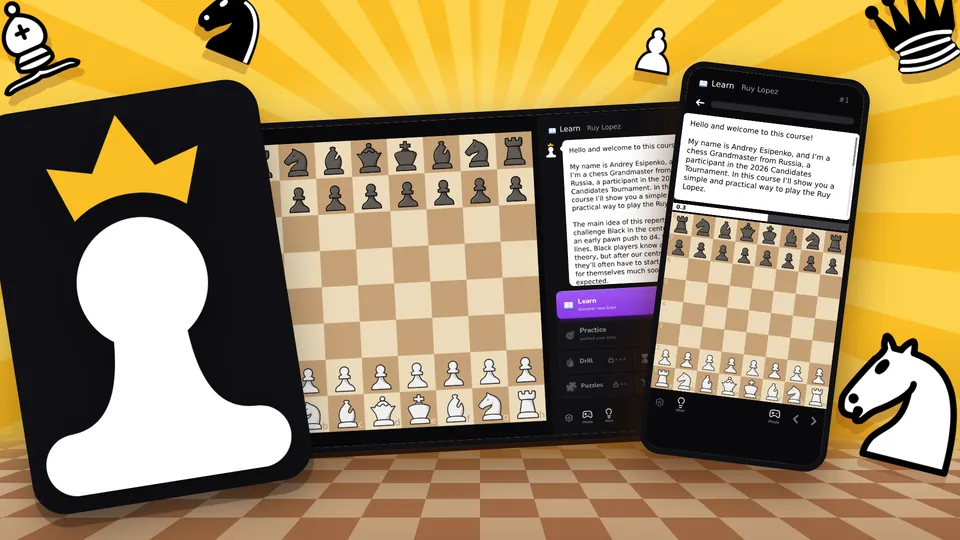
Chessreps vs Chessly in 2026: which opening app fits you?
We make Chessreps. This page says where each tool is the better pick.
Short answer
Pick Chessreps if you want to learn each opening from a titled player and practise it by playing the moves against the course. Every course is checked against real Lichess games, and the membership costs $34.99 a year on the web.
Pick Chessly if you learn well from GothamChess videos and want IM Levy Rozman's choice of lines, and his way of teaching, in every course.
By Ethan Netz, founder of Chessreps · Updated · Competitor facts checked
How do Chessreps and Chessly compare?
Both sell a single membership that opens every course, so price per course isn't the question. What separates them is who picks the lines and whether you learn by watching or by playing.
| Chessreps |  Chessly | |
|---|---|---|
| Where the lines come from | ||
| Where the lines come from | 59 courses by 41 titled players and 800+ community courses. Every course gets a coverage score against real Lichess games. | Chosen by IM Levy Rozman (GothamChess) for all 67 courses. |
| How it drills you | ||
| How it drills you | You play every move yourself and the course answers. FSRS spaced repetition in Practice, plus Drill, Puzzles, Time Trials and a rated Arena. Wrong moves are explained. | Interactive lessons, drills and videos, with XP and leaderboards. How reviews are scheduled is not published. |
| Build your own or import | ||
| Build your own or import | Course creator: paste or drop a PGN, or import a Lichess study. It lists the gaps you will face most. | Not documented. A repertoire builder is on the roadmap. |
| Platforms | ||
| Platforms | Web, iPhone, iPad, Android | Web, iPhone, iPad, Android |
| Free option | ||
| Free option | No signup to start. The first line of every course is free. | 7-day free trial without payment details. |
| Paid price | ||
| Paid price | $34.99/year on the web after a 7-day free trial. App store prices are higher because Apple and Google take a cut. | One membership covers every course: $89.99/year on the web. iOS in-app: $9.99/month or $89.99/year. |
| App Store (US) | ||
| App Store (US) | 4.9 (2,400+ ratings) | 4.6 (23 ratings) |
| Google Play (US) | ||
| Google Play (US) | 4.9 (2,700+ reviews) | 4.9 (85 reviews) |
| Best for | ||
| Best for | Learning openings by playing them, from ready-made courses built around the moves real opponents play. | Beginners and GothamChess fans who want video lessons and one subscription for everything. |
| Main trade-off | ||
| Main trade-off | Shorter courses than a long GM book, and no long video lectures. | Every line is one author's choice, and the native apps only launched in October 2026. |
A check marks the best value in each column.
How do you practice the lines?
A Chessly course pairs Rozman's video explanations with interactive lessons and drills, while a Chessreps course has you play every line against the board from the first move.
Chessly's own description is "clear video explanations paired with practice tools that reinforce what you learn", and the course pages read the way Rozman talks on his channel. The Vienna course calls it "Levy's main recommendation: the wonderful Vienna" and tells you to pair it with a bonus course, the Dark Vienna. The Caro-Kann page suggests watching his Caro-Kann playlist on YouTube alongside it. The blurbs also say who each course suits, the way a coach would. The English is "Best suited for intermediate and advanced players", and the Danish Gambit page says "If you're below 1500, this could score you some very crushing victories." Around the lessons sit XP, achievements and leaderboards, and a bot called Levi to play against. Chessly doesn't publish how it schedules reviews or what happens after a missed move, so I won't guess at either.
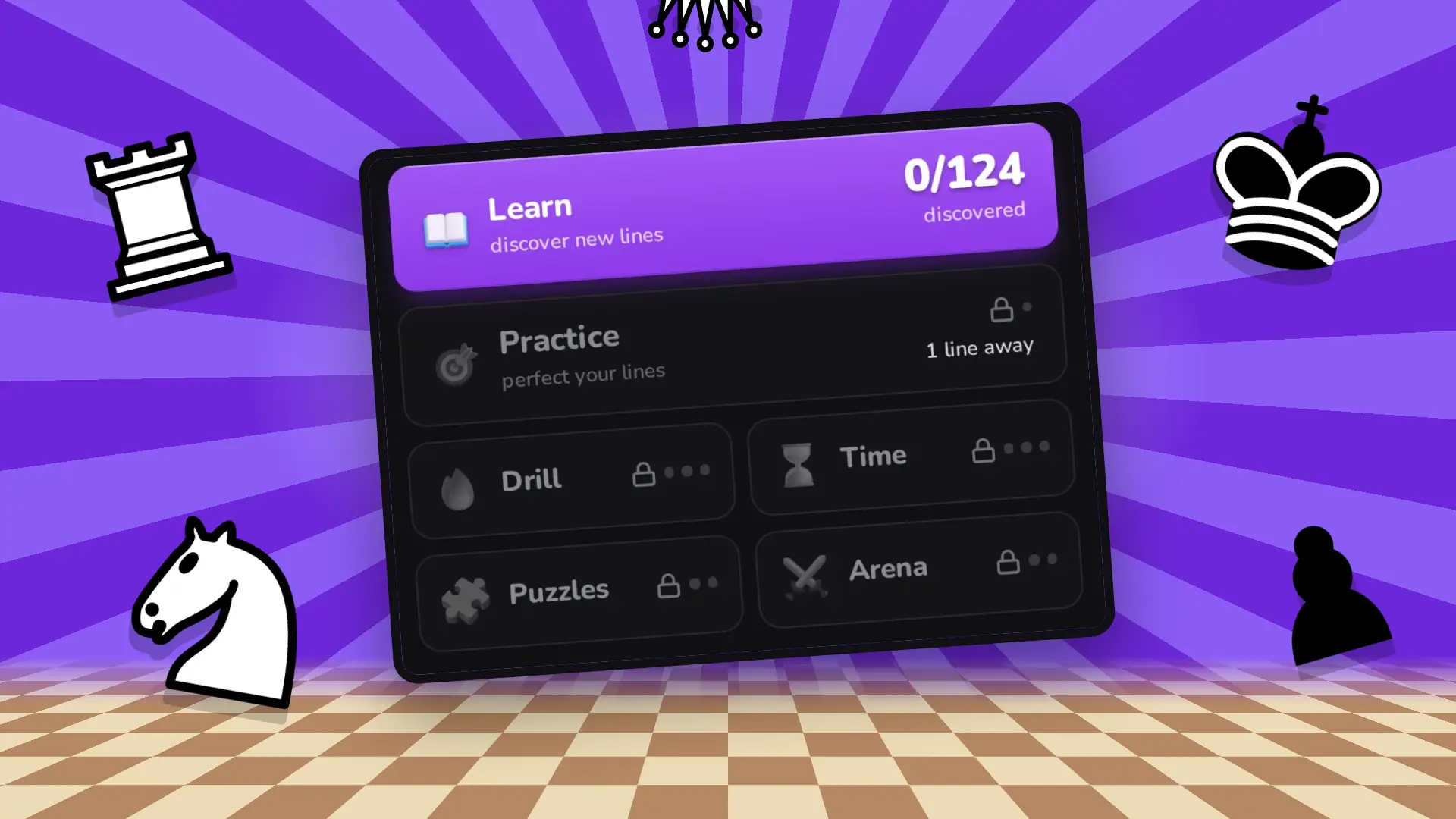
On Chessreps there's no video to watch first. The course plays your opponent's moves and you play yours, and the author's note appears in the position it's about. A wrong move gets an explanation of what it loses before you try again. One player wrote, "I love that you explain WHY a pawn is pushed", which is the job video does on Chessly and written notes do here.
After the first pass, Practice schedules each line with FSRS, so a line you fumbled comes back soon and one you played cleanly waits longer. Drill turns your learned lines into a streak, and Arena leaves the book behind and plays the opening out against moves from Lichess players near your rating, with a separate rating for each course. The full rules for Arena are on the Chessreps vs Chessable page.
Who writes the courses?
On Chessly every course comes from one teacher, and on Chessreps they come from 41 different titled players.
Rozman chose the lines for all 67 Chessly courses you can start today, with 6 more marked as coming soon. If you already learn from his YouTube channel, that consistency is the attraction, since your White and Black repertoires come from the same mind.
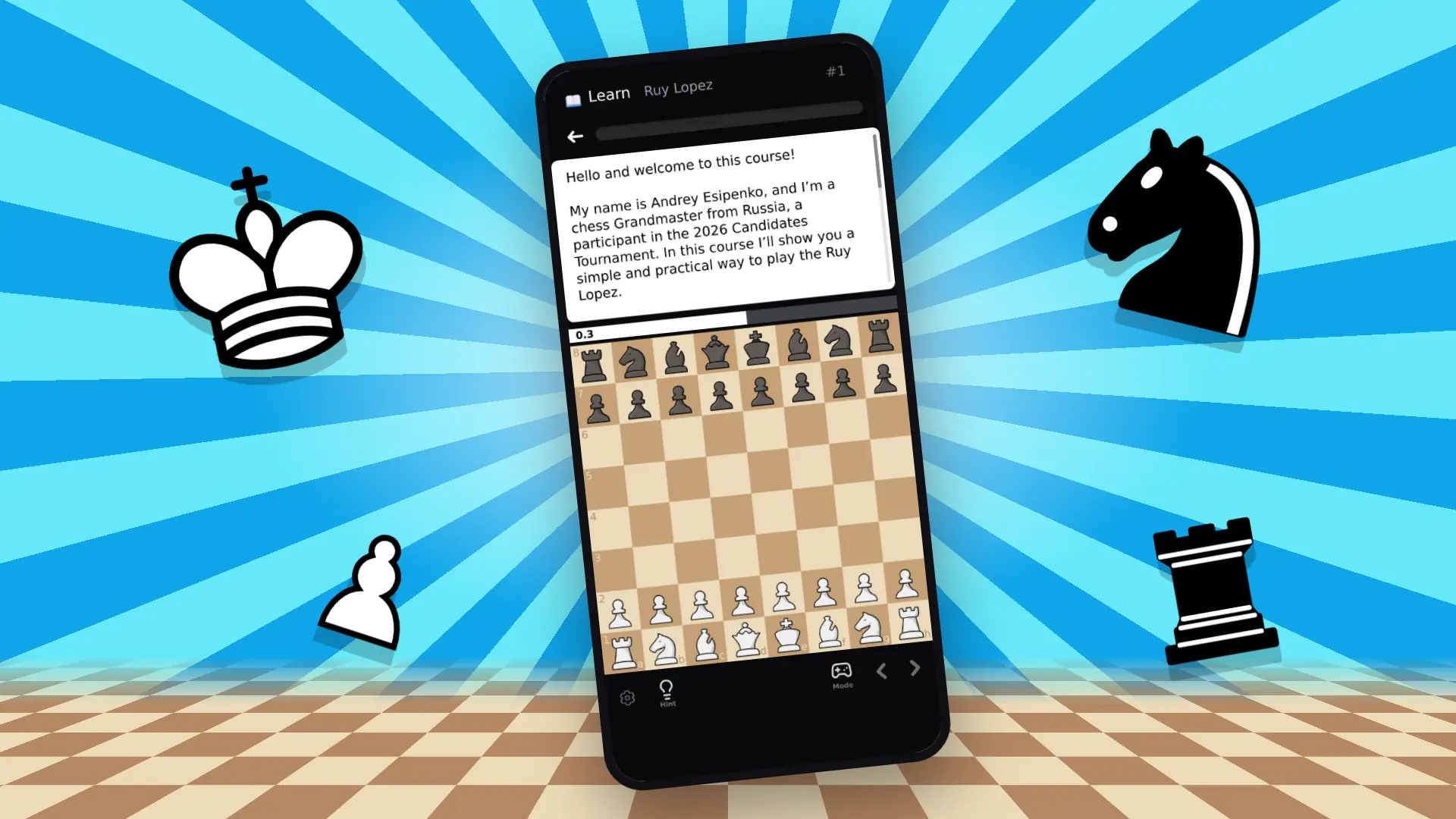
Chessreps spreads its 59 titled courses across many authors. Your Ruy Lopez can come from GM Andrey Esipenko and your Caro-Kann from someone else entirely, and there are 800+ community courses on top.
One teacher means one view of every opening. Forty-one means the tone changes from course to course, some drier and some funnier, and a new voice each time you start an opening. Neither is free of cost.
Will the lines match what your opponents play?
Rozman picks every line on Chessly and a titled author picks them on Chessreps, but only Chessreps then checks each course against real Lichess games, so a reply your opponents choose often counts against the course until the author answers it.
That check gives each course a coverage score, shown on community course cards, and our authors fill the most-reached holes first. The Chessreps vs Chessable page walks through the scoring.
The Scholar's Mate shows why we check rather than trust instinct. Any strong author could be forgiven for treating 1.e4 e5 2.Bc4 Nc6 3.Qh5 as beginner material. Lichess players reached that position about 9.7 million times in our data, and in about 572,000 of those games Black played 3…Nf6 and allowed 4.Qxf7 mate. A Black course built on 1…e5 has to answer 3.Qh5, whatever anyone thinks of it. No author, ours included, can hold numbers like that in their head for every position in a repertoire, which is why the check runs on real games. The rest of the data is on our page of what players play at every rating.
Can you use it on your phone?
Yes. Chessly and Chessreps both run on the web, iPhone and iPad, and on Android.
Chessly's iPhone app first went on the App Store on October 16, 2026, and its ratings so far are 4.6 (23 ratings) there and 4.9 (85 reviews) on Google Play. Chessreps has 4.9 (2,400+ ratings) and 4.9 (2,700+ reviews). Chessreps also opens without an account, so you can play a line on your phone before you've decided anything.
What do Chessreps and Chessly cost?
On the web a year of Chessreps is $34.99 and a year of Chessly is $89.99, and each includes every course.
That makes Chessreps less than half the price of Chessly. Chessly keeps the same $89.99 yearly price in its iPhone app, where a month costs $9.99. The Chessreps apps charge more than its website does.
Chessly's trial is easy to start, at 7 days without payment details, and if you pay and change your mind there's a 7-day money-back guarantee. Chessreps lets you play the first line of any course with no account, then gives a 7-day free trial of everything.
Where is Chessly the better pick?
Chessly is the better pick if you learn best from video and want one teacher you already trust for every opening.
Every course is narrated by Rozman, and Chessreps has written notes with no long video lectures. The catalogue goes beyond openings, with beginner, middlegame and endgame courses such as the Tactics Masterclass in the same membership. The trial asks for no payment details, the guarantee covers your first week after paying, and XP, achievements and leaderboards reward you for coming back. Chessly's homepage says 1,391,740 people have tried Chessly.
Which should you pick?
The deciding question is whether you learn an opening better by watching Rozman explain it or by playing it yourself.
If his videos are how you learned the game, Chessly keeps that teacher for every opening and adds tactics and endgames. If you'd rather choose each opening from a player who wrote it for you, check it against what opponents really play, and test it in rated Arena games, Chessreps is built for that.
What are other Chessly alternatives?
If neither fits, read Chessreps vs Chessbook for building your own repertoire from data, or Chessreps vs Lichess for the free route.
How we compared
I've used Chessable, Chessly, Chessbook and Lichess myself. Every competitor fact on this page comes from that product's own website, help pages or store listing, read on November 2, 2026. Each source is listed below. Prices are in US dollars. Store ratings are from the US App Store and Google Play on the same day.
Prices and features change. If something here is wrong or out of date, email ethan@chessreps.com and I will fix it and update the date at the top.
Sources checked
- Chessreps
- Chessly
Chessable, Chessly, Chessbook, Lichess and the other names and logos on this page belong to their owners. Chessreps isn't affiliated with them.
Frequently asked questions
Is Chessly worth it?
Chessly is worth it if you like Levy Rozman's videos and want one teacher for every opening, since one membership opens all 67 courses. If you mainly want to drill openings against the moves real players make, compare it with Chessreps, which costs $34.99 a year on the web and checks every course against Lichess games.
Is Chessly free?
Chessly is free for a 7-day trial that doesn't ask for payment details, and after that you need a membership. Chessreps lets you play the first line of any course without an account, then offers a 7-day free trial.
How much is Chessly a year?
Chessly costs $89.99 a year on its website and the same in its iPhone app. Chessreps costs $34.99 a year on the web.
Does Chessly use spaced repetition?
Chessly doesn't publish how it schedules reviews, though it describes lessons, drills and videos. Chessreps uses FSRS in Practice, which picks when each line comes back from how well you played it last time.
Can I build my own repertoire on Chessly?
Chessly's public pages don't describe a way to build your own repertoire, though a repertoire builder is on its roadmap. Chessreps has a course creator where you paste a PGN or import a Lichess study, and it lists the replies you haven't prepared, most common first.
Does Chessly have courses besides openings?
Yes, Chessly's membership also covers skills courses, with beginner, middlegame and endgame courses such as the Tactics Masterclass. Chessreps is openings only.